

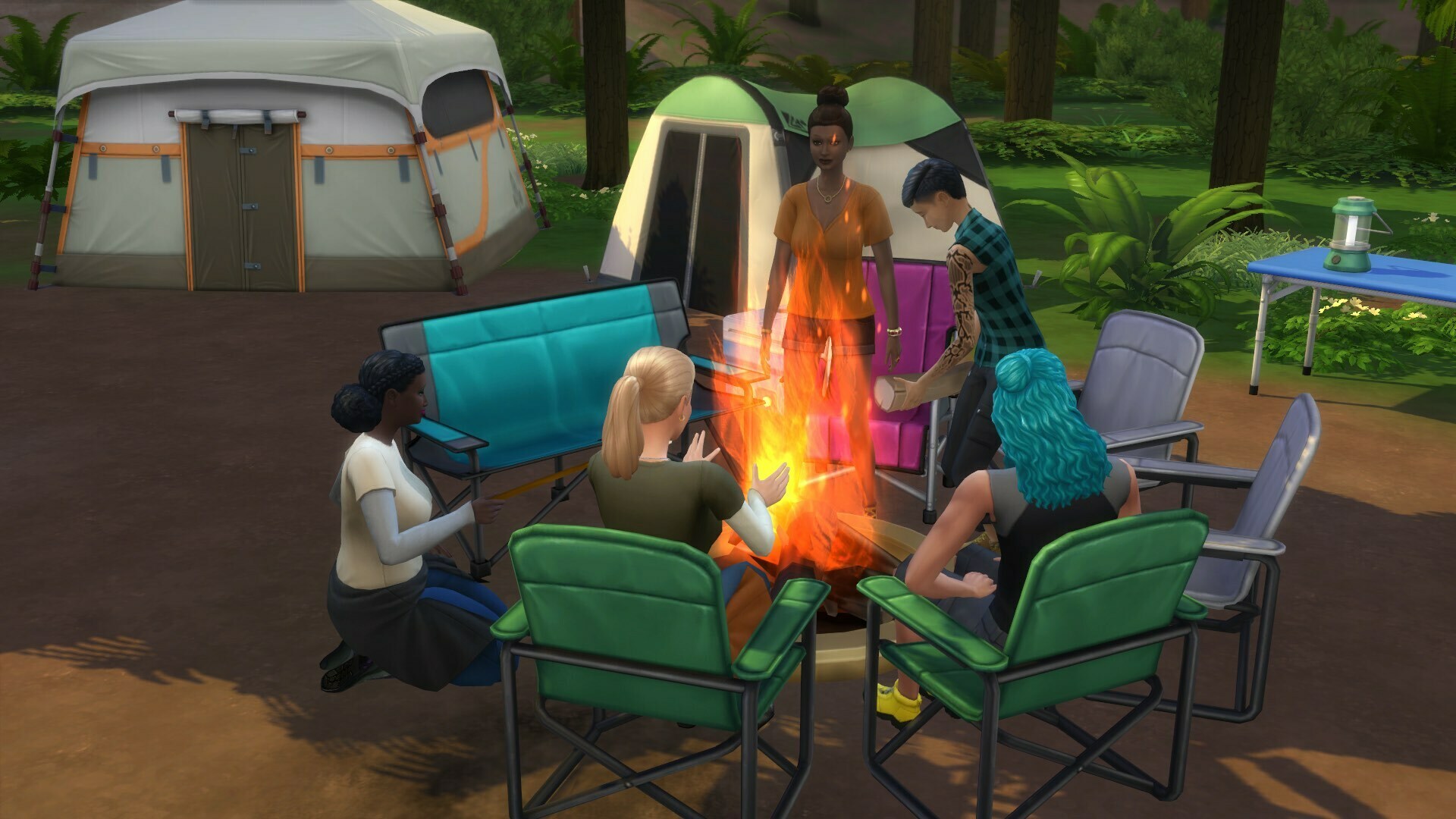
The personal computer platform provides unprecedented opportunities for complex strategic simulation, collaborative competition, and narrative depth. However, the absorbing nature of these digital experiences easily lends itself to continuous, multi-hour sessions that neglect physical movement. Prolonged sedentariness impacts physical mobility, ocular comfort, and metabolic health.
Achieving a sustainable balance does not require abandoning digital hobbies or lowering performance goals. Instead, the most effective strategy involves integrating high-immersion PC gaming loops with structured, low-stress outdoor activities. By deliberately pairing virtual experiences with physical counter-parts, players can mitigate the physiological strains of extended monitor exposure while maintaining deep mental engagement.
The Physiology of the Screen and Turf Split
Engaging with high-fidelity monitor displays triggers specific physiological adaptations that require active physical countermeasures. Relying strictly on passive indoor rest fails to reverse these structural adjustments.
-
Ocular Strain and the Accommodation Reflex: Focusing continuously on a display plane positioned twenty-four inches from your face locks the ciliary muscles of the eye into a state of prolonged contraction. Stepping outside forces a shift to long-range ocular accommodation, allowing these internal tracking muscles to relax fully while ambient sunlight helps regulate pupil dilation and circadian rhythms.
-
Postural Reset and Kinetic Chain Alignment: Extended sitting strains the lumbar spine and shortens the hip flexors, which can lead to gluteal inactivity. Transitioning to an outdoor activity introduces multi-directional movement patterns that reactivate the posterior kinetic chain, unburdening the spine and promoting systemic blood circulation.
Designing Complementary Activity Pairings
The most successful framework for balancing screen time pairs the core mental demands of specific PC genres with physical outdoor activities that mirror or complement those exact cognitive structures.
Strategy Blueprints: Pairing Grand Strategy with Tactical Precision
Players who favor complex real-time strategy games or grand historical simulations thrive on resource management, territory control, and spatial positioning. Leaving the desk can feel jarring if the next activity lacks a clear purpose.
-
The Physical Counterpart: Pairing these complex digital loops with a structured, physics-based target game like Kubb or Bocce Ball preserves the analytical mindset. Measuring throw trajectories, calculating baseline defense angles, and managing team positioning on a real lawn replicates the tactical depth of a strategy map without the cognitive exhaustion of a digital interface.
High-Mobility Synapses: Matching Fast-Paced Shooters with Dynamic Coordination
First-person action games and competitive tactical shooters demand exceptional hand-eye coordination, swift spatial tracking, and rapid reflex processing. These titles elevate adrenaline production, which can leave players feeling physically restless yet mentally drained when the session ends.
-
The Physical Counterpart: Directing this residual neurological energy into high-mobility backyard games like Kan Jam or Spikeball offers a perfect physical release. The continuous visual tracking of a flying disk or a ricocheting rubber ball utilizes the same spatial awareness systems developed during fast-paced digital matches, converting static tension into active cardiovascular movement.
Implementing Structural Scheduling Frameworks
Achieving equilibrium requires moving away from vague promises to take breaks and adopting structured, rule-based schedules that govern game transitions.
The human brain operates on ultradian rhythms, with cognitive focus naturally cycling every ninety minutes. Continuing a competitive PC session beyond this threshold leads to diminishing returns, slower reaction times, and increased mechanical mistakes.
Structuring your time into explicit ninety-minute digital blocks followed by twenty-minute outdoor intervals optimizes both skill execution and biological recovery. Treat the outdoor movement phase not as an interruption to your gaming session, but as a mandatory cooling period designed to clear processing waste from your working memory.
Optimizing the Physical Transition
Maximizing the therapeutic value of stepping away from the desk requires separating your outdoor environment from digital notifications.
-
Enforce a Direct Device Blackout: Carrying your smartphone into the backyard during an outdoor break defeats the primary physiological purpose of the transition. Ocular fatigue persists if you swap a large desktop monitor for a compact handheld display. Leave all mobile communication devices inside to guarantee absolute neural recovery.
-
Capitalize on Natural Surface Variations: Operating on dynamic, uneven natural surfaces like grass, packed soil, or sand engages minor stabilizing muscles throughout the ankles, knees, and core. This multi-planar instability fixes the subtle postural imbalances caused by long sessions in a highly uniform ergonomic desk chair.
Long-Term Benefits for Gaming Performance
The relationship between outdoor activity and PC gaming capability is deeply collaborative rather than competitive. Physical decompression directly improves digital execution metrics.
Regularly breaking up long computer sessions with outdoor intervals prevents the accumulation of physical fatigue that ruins fine motor precision during competitive play. Refreshed ocular tracking reduces visual scanning delays, while localized circulatory increases keep wrist and finger joints limber, lowering the long-term risk of developing repetitive strain injuries. By protecting your physical health, you directly extend your gaming endurance and maintain a higher peak performance ceiling over time.
Frequently Asked Questions
How does short-range monitor focus impact long-term distance vision?
Continuous near-work focus inside enclosed spaces can induce a temporary condition known as pseudomyopia, or accommodative spasm, where the ciliary muscles remain locked in a near-sighted configuration. Spending dedicated time outdoors looking at distant horizons encourages these muscles to stretch and release, preserving distance focusing flexibility.
Can stretching indoors provide the same recovery benefits as playing an outdoor lawn game?
While indoor stretching targets localized muscle tightness, it fails to deliver the comprehensive neurological benefits of outdoor play. Outdoor settings expose the sensory system to natural ambient light, which triggers serotonin release and lowers systemic cortisol. Furthermore, dynamic lawn games demand spontaneous spatial calculations that keep the body moving through diverse, unscripted angles that structured indoor stretching routines rarely replicate.
What parameters determine if a backyard surface is safe for high-mobility games like Spikeball?
A suitable playing surface must be clear of hidden tree roots, structural drop-offs, and deep subterranean holes that can cause acute ankle inversion injuries. The grass should be kept uniformly short, and the soil should feel firmly packed to provide reliable traction during explosive directional changes.
How does sitting for multiple hours alter real-time reaction speeds in competitive PC games?
Prolonged sitting causes blood to pool in the lower extremities, which slightly reduces systemic circulatory efficiency and oxygen transport to the brain over time. This minor drop in oxygenation can manifest as sluggish cognitive processing, reduced attention span, and a measurable deceleration in raw split-second reaction times during late-stage gaming sessions.
Why do open-ended target games like Kubb help lower frustration after difficult multiplayer losses?
High-stakes digital losses can cause a prolonged spike in adrenaline and stress hormones. Transitioning to a game like Kubb shifts your focus to low-stakes, highly predictable physical laws. The slow pacing and concrete tactile feedback provide an immediate psychological grounding effect, cleanly separating your self-esteem from digital competition metrics.
Does playing outdoor games in cold winter weather reduce the physical recovery benefits?
As long as you wear appropriate layered clothing to maintain core temperature, cold-weather activity remains highly beneficial. Cooler air requires the cardiovascular system to work efficiently to distribute heat, which boosts general blood circulation. The exposure to natural daytime sunlight remains vital for sleep regulation, even during shorter winter days.
